


★
★
★
★
★

Metallic Foil Playing Card Printing
Our metallic foil playing card printing is sure to add that extra wow factor to your poker, collective card game, tarot cards and more. With a tried and tested foil printing process, we can guarantee our foil playing cards are the best quality in the world.
Custom Playing Cards With Over 10 Shiny Foil Colours
We have over 10 foil colors to choose, so you can add gold, silver, purple, green or copper foil highlights to your playing card deck. We also have the most extensive range of foil colors and paper types which give you the option of over 300 different foil playing card combinations. Better yet, because of our digital foiling technique, we don't force you into choosing a premade design. You can foil and print whatever you like, giving you unlimited freedom to make your next foiled playing cards exclusive, collectible and ultra rare!
Foil Playing Card Printing And Designing
We understand that for some, creating your artwork can be too time-consuming so we can even design your playing cards for a discounted price when ordering your print, just select 'supply brief and we design' when you place your order. We will need you to write a design brief to let us know any ideas or requirements if you have any. If not, just the quantity of cards you need is fine. Then one of our in-house graphic designers will work with you until you are 100% happy with their design.
Lastly, to protect your playing cards and make the foil come out smooth and crisp, we have to laminate all of our prints with a soft touch matt finish. Not only does it offer extra thickness, but it makes your glossy foil highlights stand out and shine even more.

Fast turnaround with dispatch from 4 working days, using a 1-3 day delivery

Foil printing specialists with 20+ years’ experience

Customize foil, stock, and finishes to match your style

Artwork checked by our team before printing (no surprises!)

Digital proof provided before print approval
Print orders completed
Recent Playing Card Projects
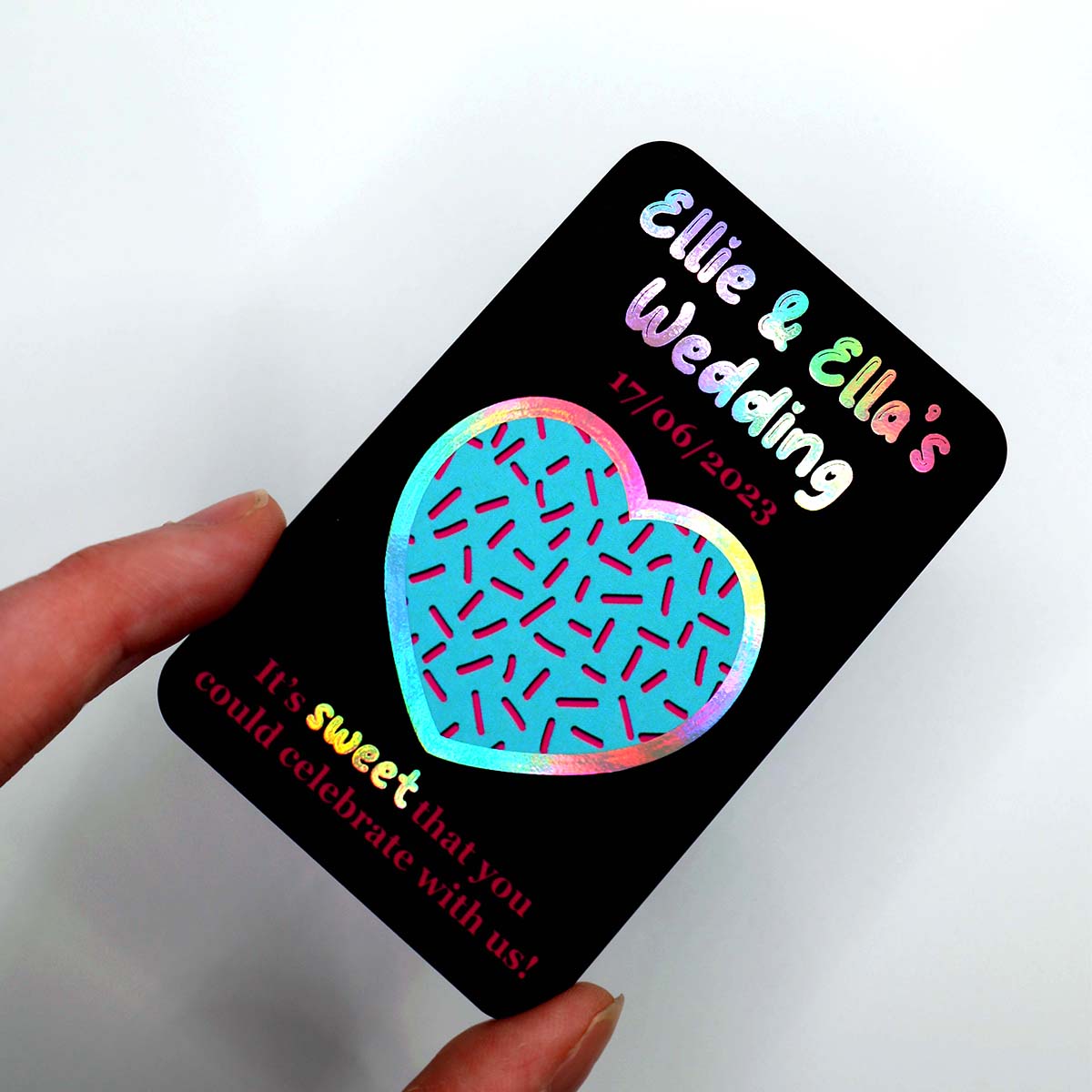
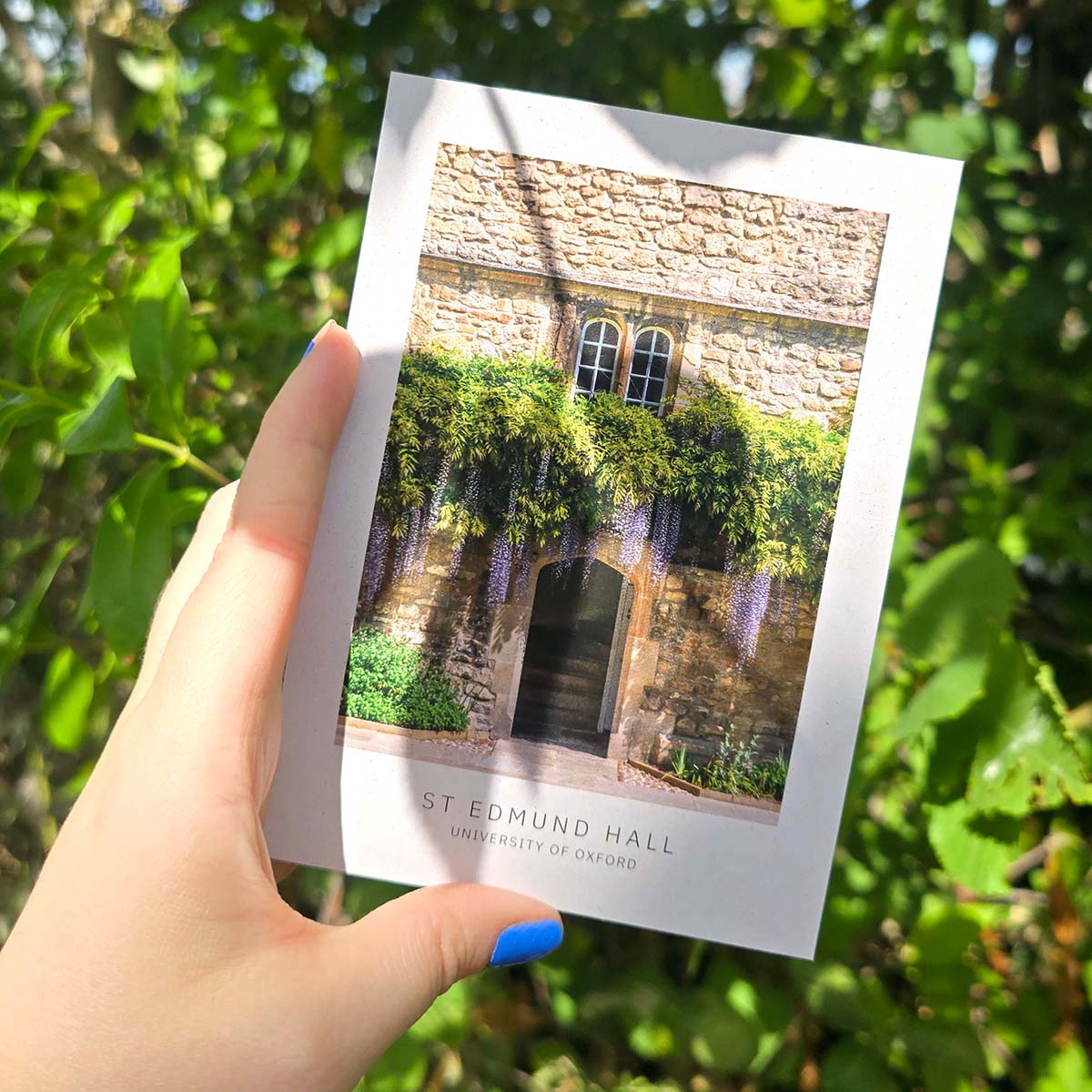
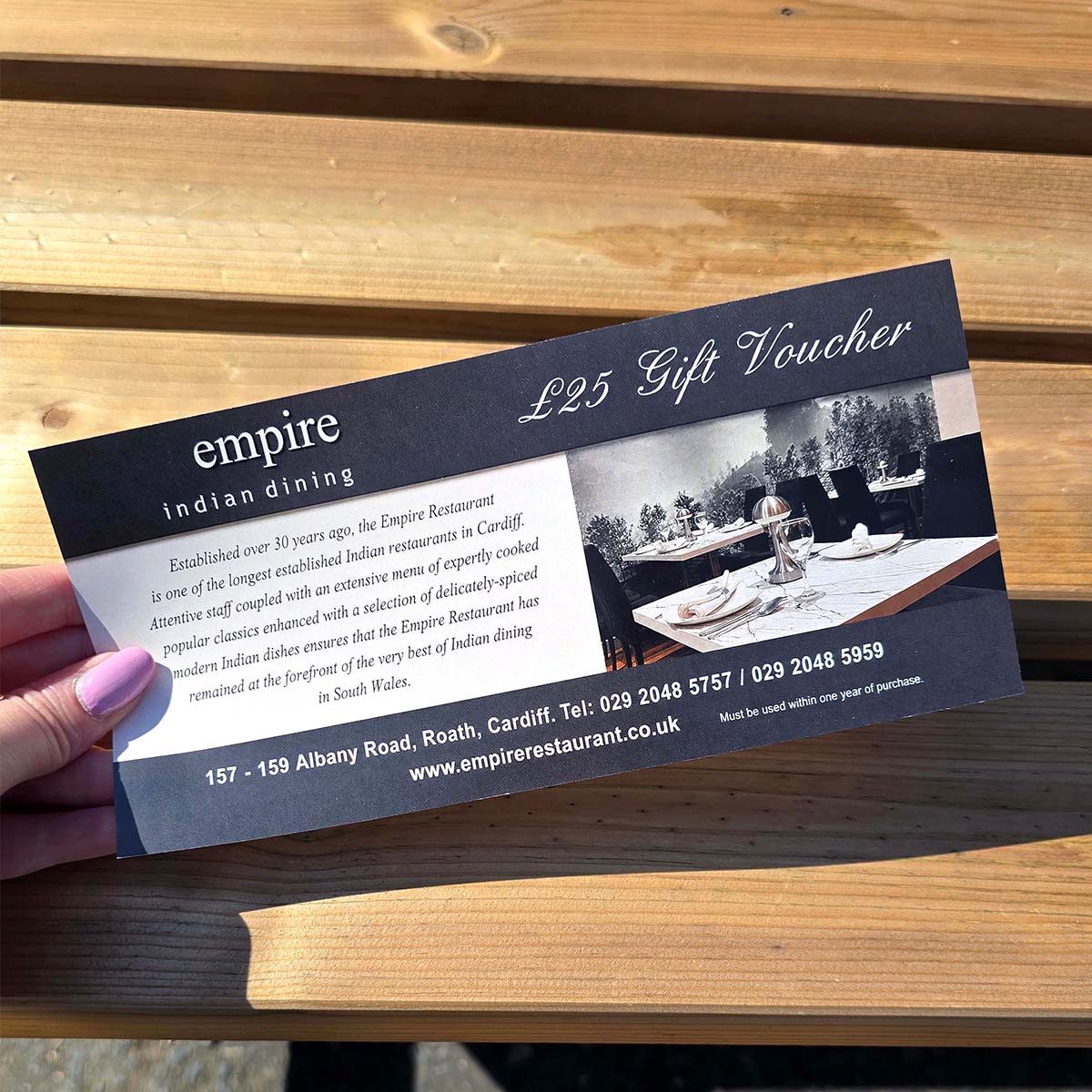
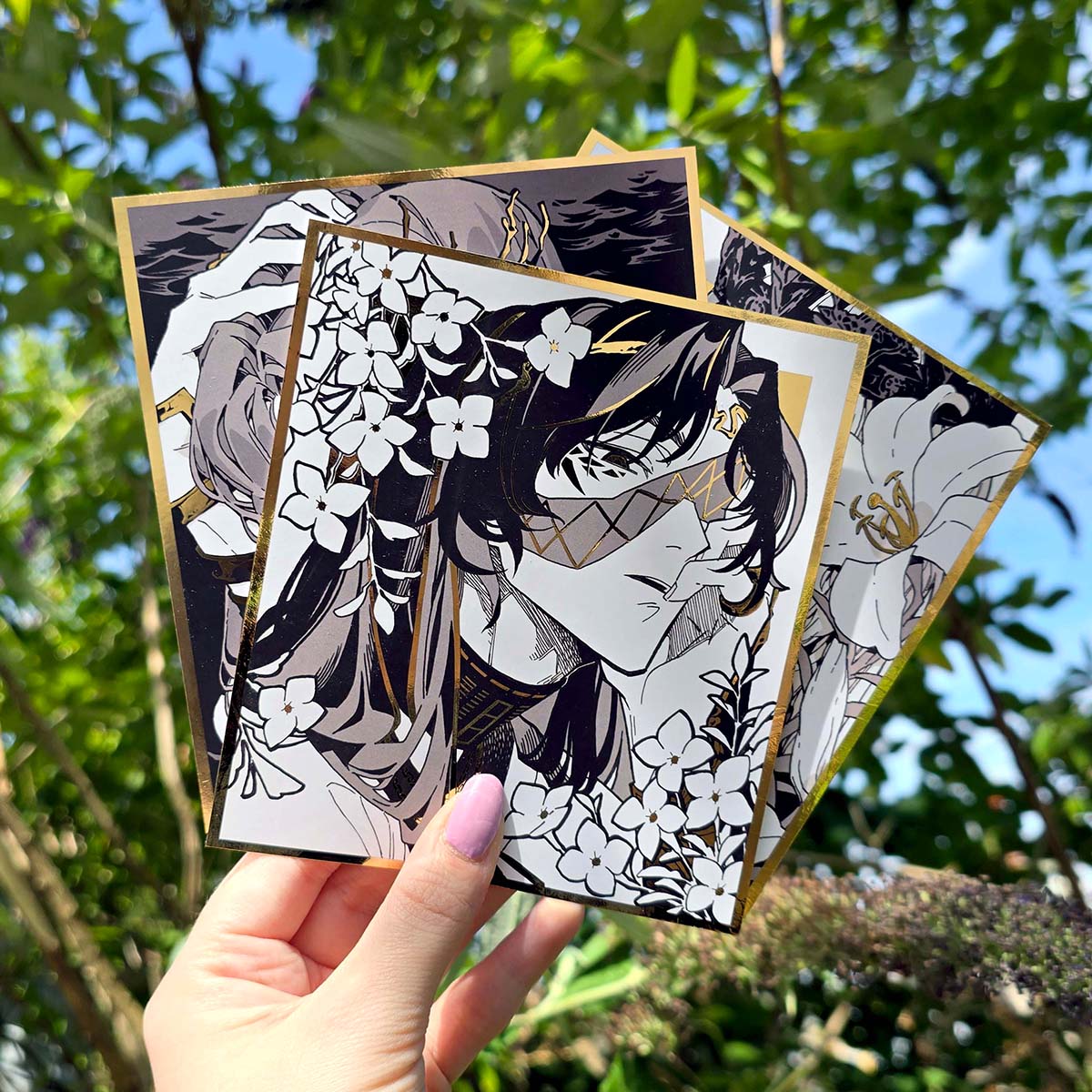
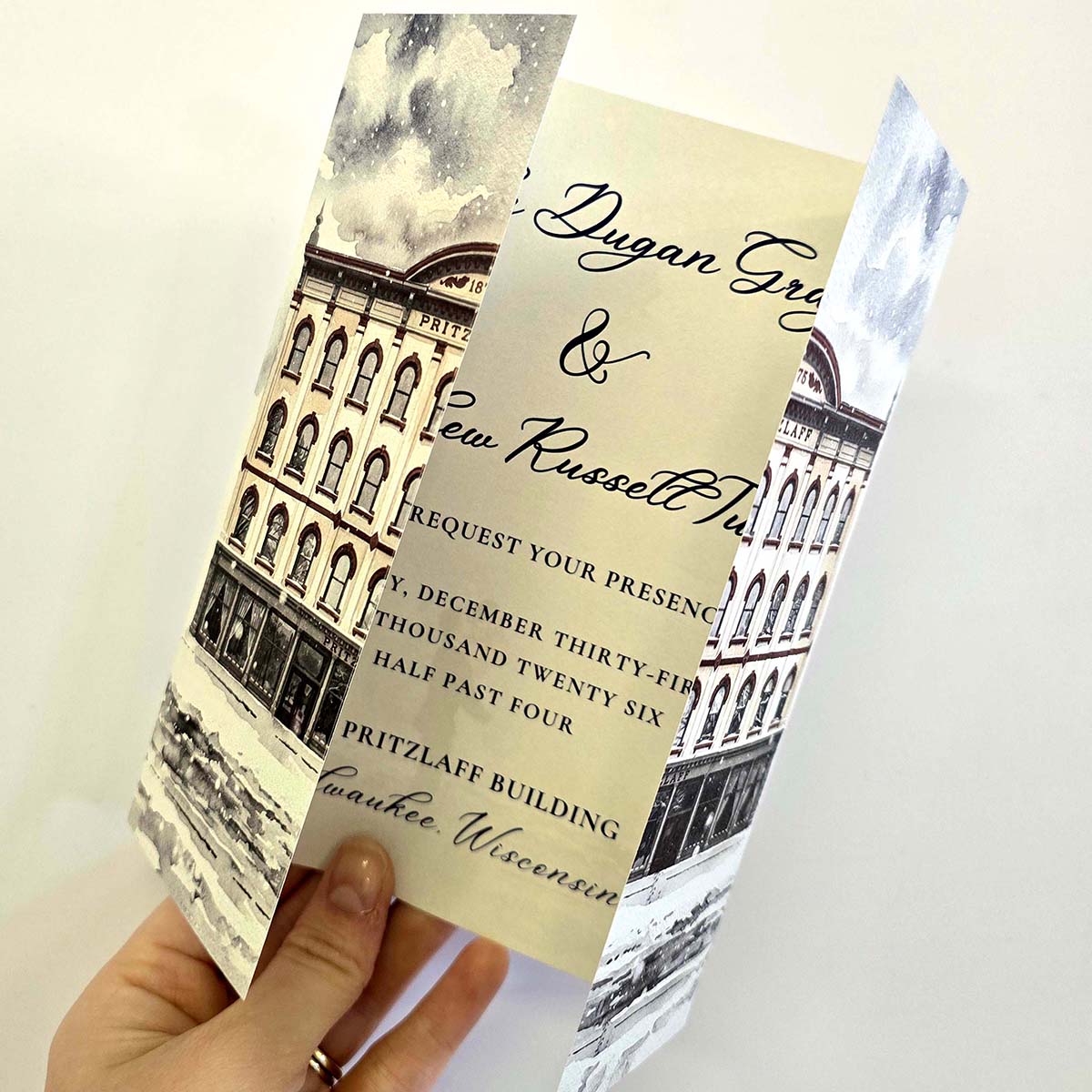
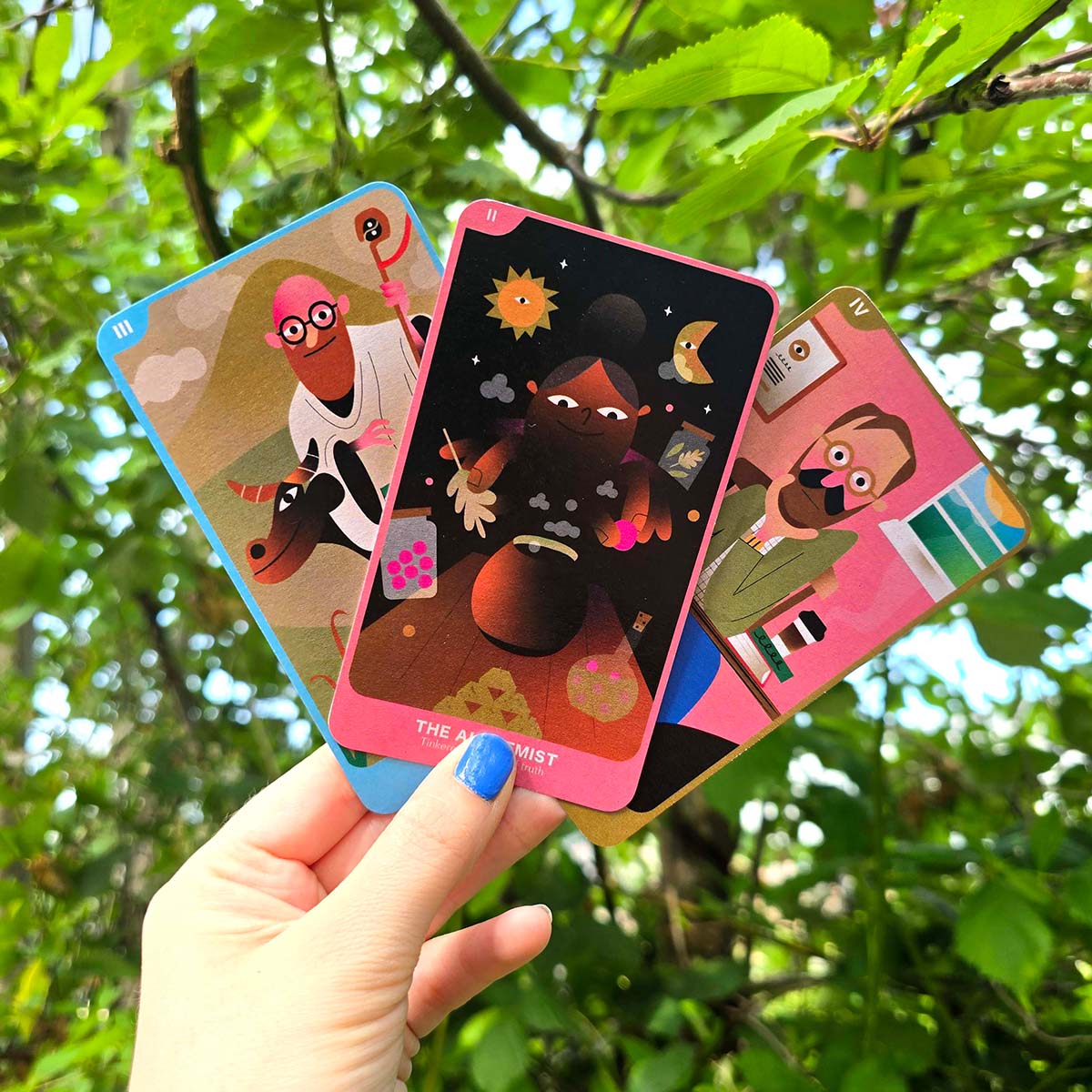
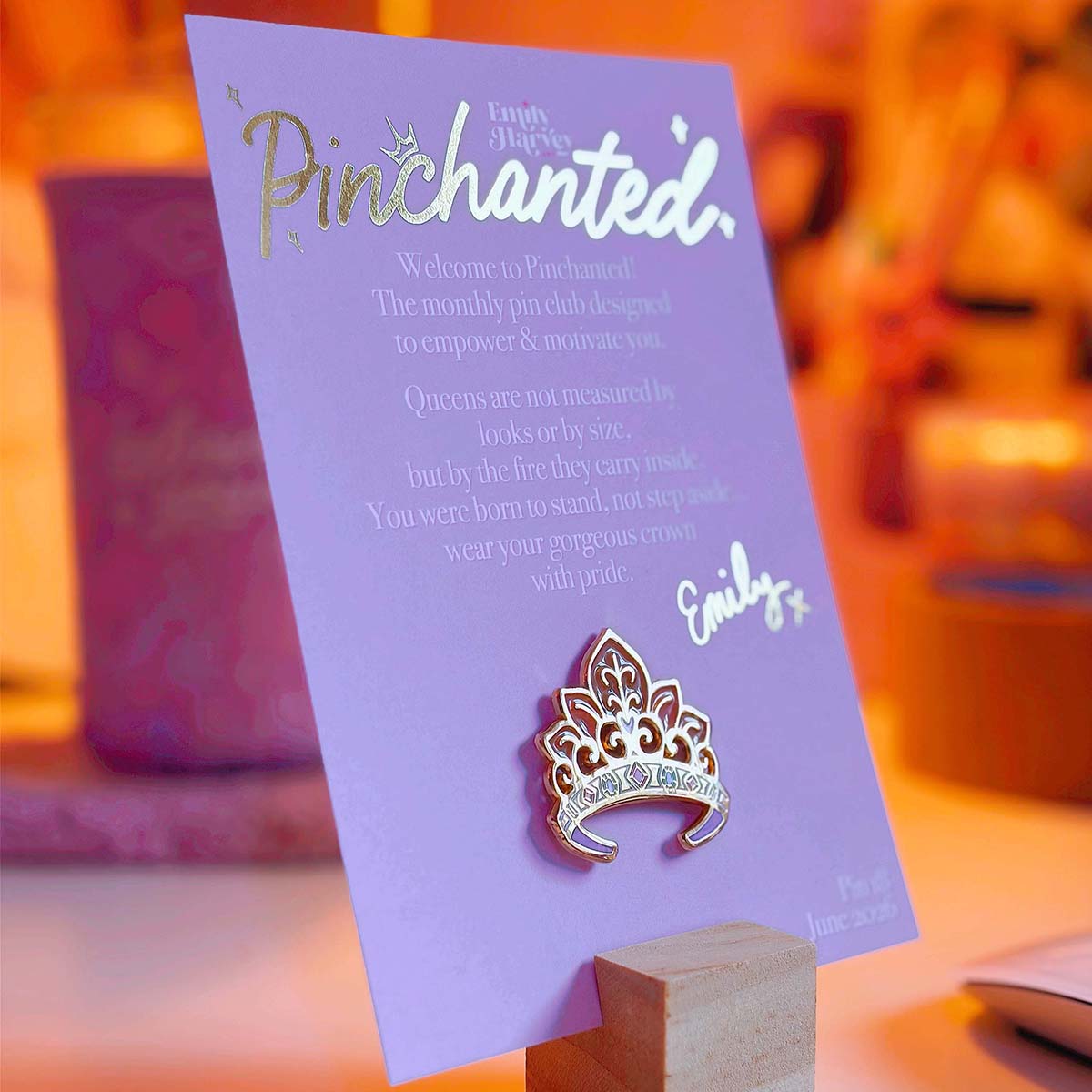
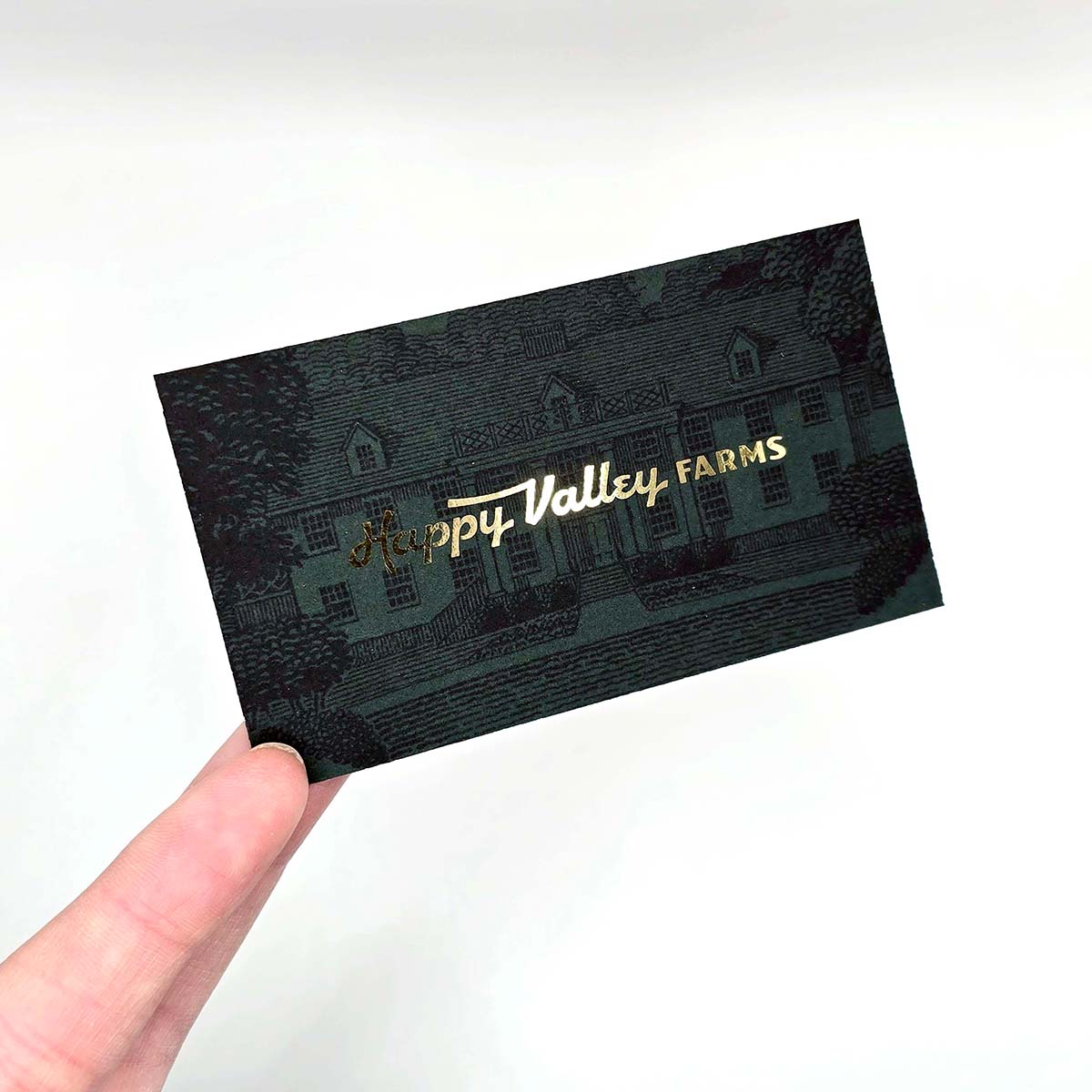
Explore a selection of custom playing card decks produced for game creators, brands, artists, and independent retailers. Each project takes a different approach, from fully foiled designs that carry metallic detail across every card, to more restrained decks where foil is used selectively to highlight key elements like backs, logos, or suit details.
What stands out across these decks isn’t just the visual style, but how each one has been built to function in use. Choices around stock, finish, and foil placement all play a role in how the cards handle, shuffle, and wear over time.
Some decks lean into bold, high-impact designs, while others rely on clean print and subtle detailing. In every case, the same attention is given to consistency across the full set, ensuring that each card feels like part of a cohesive, well-produced deck.
This gallery gives you a clearer sense of how different design decisions translate into a finished product, helping you shape your own deck with confidence.


Paper Stocks for Metallic Foil Playing Cards
In a deck of playing cards, the material you choose affects far more than just appearance. Stock selection influences how cards handle, shuffle, wear over time, and how foil performs across repeated designs.
Every stock in our paper range has been tested extensively with our digital foiling process to ensure reliable adhesion, sharp detail reproduction, and consistent results from the first card to the last. This is important where even small inconsistencies become noticeable across a full deck.
Silk and gloss stocks provide the smoothest surfaces for foil application, helping achieve crisp edges, sharp detail, and strong metallic definition.
For a more natural appearance, uncoated and recycled stocks soften the overall effect while retaining clear foil detail.
We also offer Colorplan and color core papers, which introduce color and texture directly into the material itself, creating playing card decks that stand apart from traditional stocks.
Our range includes carefully selected materials chosen specifically for their suitability with foil playing card production. Combined with our finishing processes, these stocks help deliver clean foil application, consistent handling characteristics, and a professional finish throughout the entire deck.
-
 Silk Playing Cards
-
 Gloss Playing Cards
-
 Uncoated Playing Cards
-
Recycled Playing Cards
-
GF Smith Colorplan Playing Cards
-
Color Core Playing Cards
Metallic Foil Colors for Playing Cards
Foil color can play a significant role in how a deck of playing cards is perceived. Beyond simple decoration, different metallic finishes influence contrast, visibility, and the overall character of the design. The same deck can feel traditional, modern, luxurious, playful, or highly collectible depending on the foil color selected. Metallic foils also offer an opportunity to reimagine familiar playing card layouts, elevating visual identity while retaining the recognizable structure players expect.
At The Foil Printing Co, we offer a range of 12 metallic foil colors, including classic gold and silver, colored foils such as red, blue, green, and violet, alongside our highly reflective holographic finish. Each color interacts with light differently, creating unique levels of contrast, depth, and visual impact across the deck.
Foil can be used to reinforce established playing card conventions, or support a specific theme. From traditional red and black-inspired layouts through to fantasy, heritage, luxury, or collector-focused designs, the right foil color helps establish the tone of the deck.
Choosing a foil color is about more than personal preference. It influences how artwork is read, which elements attract attention first, and how the finished deck feels in the hands of players and collectors alike.

Gold Foil Playing Cards
Gold foil has always been one of our most popular choices, and for good reason. It produces a warm, reflective finish that works well for highlighting key elements such as logos, borders, and headings. It tends to read clearly across most designs and maintains strong contrast, particularly on darker backgrounds.
Gold foil is often used to introduce warmth and a sense of tradition across a deck, useful for backs and borders, and classic-style face cards. Its richer tone softens contrast slightly, giving designs a more refined, less clinical finish.
Best for: Premium decks, branded card sets, decorative back designs, and layouts where a warm metallic accent adds clarity and depth
How to Choose the Right Foil for Playing Cards
Every playing card deck has its own priorities. A deck designed for regular gameplay will often focus on clarity, handling, and durability, while cardistry, magic, and collector decks may place greater emphasis on visual impact, artwork, and presentation. Material choice, foil placement, and overall design all contribute to how the finished deck looks, feels, and performs in use.
The examples below illustrate some of the most common approaches we see across custom playing card projects. Rather than focusing on individual paper stocks or foil colors, they demonstrate how different design decisions work together to create a specific outcome, helping you identify the direction that best suits your own deck.
|
Style Outcome |
Where Foil is Used |
How it Comes Together |
Design Guidance |
|
Classic and playable |
Suit symbols, indices, with subtle detailing on the backs |
Familiar deck structure with subtle metallic emphasis on key areas |
Prioritise readability. Ensure foil supports, rather than replaces, standard suit contrast |
|
Premium and collectable |
Card backs, border systems, and court card details |
Elevated finish with metallic highlights across key elements |
Focus foil on visible surfaces. Avoid overloading functional areas |
|
Bold and eye-catching |
Full or near-full foil coverage across the card backs |
Highly reflective backs that define the deck at a glance |
Use primarily for collector or limited-use decks. Break coverage to minimise wear visibility |
|
Clean and minimal |
Small, isolated elements on backs and selected face details |
Sparse layouts with controlled metallic points of interest |
Use foil sparingly. Rely on spacing and structure to carry the design |
|
Themed and illustrated |
Court cards, jokers, and key illustrated features |
Foil integrated into artwork, reinforcing the theme |
Keep application consistent across the deck. Avoid one-off foil treatments |
|
Monochrome and stylised |
Suits, indices, and back design unified in a single foil |
Entire deck unified by one metallic color system |
Maintain a clear hierarchy between suits. Test legibility across all values |
|
Pattern-led and geometric |
Repeating patterns across the back design and borders |
Structured foil designs that repeat consistently across every card |
Avoid fine linework that may break or misalign. Ensure repeat accuracy |
|
Accents and highlights |
Targeted accents on key graphic elements |
Strong metallic contrast used to draw attention to specific features |
Limit foil to key moments. Too much reduces hierarchy and visual clarity |


What Makes Our Foil Playing Cards Different
Designing a playing card deck presents a unique set of challenges. Every decision must work not just on a single card, but across an entire deck, balancing visual impact, usability, consistency, and durability. What looks impressive on an individual card must still function when the deck is in play.
Foil introduces another layer of consideration. The placement, color, coverage, lamination and interaction with the chosen stock all influence how the finished deck is experienced. A collector deck, a cardistry deck, a promotional card set, and a traditional gameplay deck all use foil very differently, despite being produced using the same core process.
Rather than offering a limited set of predefined options, we give you the flexibility to build a deck around your own objectives. From stock selection and foil color through to sizing, artwork preparation, and additional finishing, every element can be tailored to suit the intended purpose of the deck.
The sections below explore the decisions that have the greatest influence on the final result. Understanding how these elements work together will help you create a deck that not only looks exceptional, but feels cohesive, functional, and considered from the first card to the last.
Sizes & Custom Formats
The size of a playing card influences far more than its dimensions. It affects how the deck feels in the hand, how artwork is presented, and how players interact with and admire the cards during use. To accommodate different styles of deck, we offer four standard formats alongside a custom sizing option.
Our 2.5x3.5” standard playing card remains the most familiar choice, balancing usability, portability, and design space. For projects looking to create a compact handling experience, the 2.25x3.5” slim playing card offers a narrower profile that feels controlled in the hand.
Where artwork takes centre stage, larger formats provide additional room for illustration and design. The 2.75x4.75” tall playing card creates a more elegant, elongated canvas, while the 3.5x5.75” large playing card offers maximum space for detailed artwork, collector pieces, and presentation-focused decks.
Custom sizing provides even greater flexibility, allowing the format itself to become part of the concept. Whether you're developing a custom card game, a collector deck, a promotional set, or a cardistry project, the right dimensions can help reinforce the purpose and personality of the deck before a single card is dealt.
Single or Double-Sided Foil
With playing cards, foil placement isn’t just about decoration, it affects how the entire deck is perceived in use. Unlike single-piece print, you’re working with two distinct surfaces across multiple cards, each with a different role.
Most decks focus foil on one side, typically the backs, where it creates the strongest visual impact during shuffling, fanning, and display. This keeps the faces clear and readable, especially where suit symbols and indices need to remain easy to recognize.
Using foil on both sides introduces a more considered approach. Backs can carry bold, repeatable designs, while the faces use foil more selectively to highlight structure, hierarchy, or key details. This creates a balance between visual impact and usability.
Deciding between single and double-sided foil comes down to intent. If the deck is designed for regular play, clarity and durability tend to lead. For collector or presentation decks, extending foil across both sides allows for a more cohesive and visually complete result.
Why Soft-Touch Lamination is Required
Any side of a playing card receiving metallic foil must be finished with a soft-touch lamination. This provides the consistent surface required for reliable foil application, helping achieve clean metallic detail and a durable finish across the deck.
Beyond supporting the foiling process itself, soft-touch lamination also enhances the overall feel of the cards. The smooth, tactile surface complements metallic finishes well, creating a premium balance between visual impact and handling experience.
Where foil is applied to one side only, different finishing options may be used on the reverse. When foil is applied to both sides, soft-touch lamination will be used throughout, ensuring a consistent appearance and feel across every card in the deck.
Soft-touch lamination is therefore not simply an optional upgrade. It forms an essential part of the foil production process, helping deliver the quality, durability, and finish expected from a premium foil playing card deck.
Additional Finishing Options
The finishing details applied to a deck of playing cards influence far more than appearance. They affect how the cards handle, shuffle, spread, and wear over time, making them an important part of both the playing experience and the overall presentation.
Rounded corners are one of the most important finishing features in any playing card deck. By removing sharp edges, they help cards move more smoothly against one another, reduce corner damage during repeated use, and improve handling during shuffling, dealing, and gameplay. Without rounded corners, cards are more prone to catching, bending, and premature wear.
Surface finishes also play an important role. Different laminations influence both the appearance and handling characteristics of the deck. Matte lamination creates a more subdued finish with reduced glare, while gloss lamination enhances color depth and reflectivity. Where metallic foil is applied, a soft-touch lamination is required to provide the consistent surface needed for reliable foil application and long-term durability, whilst also creating the premium tactile finish commonly associated with foil playing cards.
Together, these finishing choices help transform individual printed cards into a cohesive deck, ensuring the final product feels as refined in use as it looks on display.
Artwork Requirements
Preparing artwork for foil playing cards is largely about defining what should print and what should receive foil. Your CMYK artwork contains the printed design, while a separate foil layer identifies every area where metallic foil will be applied. Keeping these elements clearly separated allows us to accurately reproduce your design and prepare a proof for approval before production begins.
Playing card projects often contain multiple artwork files, including card backs, face cards, court cards, jokers, and packaging. Consistent setup across these elements is important where repeated patterns, suit symbols, or foil details appear throughout the deck.
Once your order has been placed, our team will review your files, check them against our production requirements, and prepare a digital proof for approval. To make setup easier, we recommend working from our playing card templates, which include the correct bleed, trim, and safe zones required for production.
Foil Playing Card Artwork Checklist
✔ Add 0.08” (2mm) bleed around every card design to ensure backgrounds, colors, patterns, and artwork extend correctly to the edge of the card.
✔ Set all artwork files to CMYK color mode.
✔ Use a minimum image resolution of 300DPI.
✔ Supply your files as PDF, JPG, or fully packaged AI files.
✔ Keep important text, suit symbols, indices, logos, and key design elements within a 0.1” (3mm) safe zone from all trim edges.
✔ Supply foil elements separately from your CMYK artwork, ideally on a separate page, layer, or artboard.
✔ Set all foil elements to 100% K black. This layer will not print as black ink and indicates where metallic foil should be applied.
✔ Check that repeated elements such as card backs, suit symbols, borders, and patterns are positioned consistently throughout the deck.
✔ If your deck contains multiple card types, including court cards, jokers, special cards, or alternate backs, ensure each variation has been supplied correctly and clearly labelled.
✔ Double-check the readability of suit symbols, indices, and card values, particularly where foil is being used in functional areas of the design.
✔ Review all card sequencing, numbering, and deck contents before submitting artwork for proofing.
Setting Up Your Foil Layer
Unlike many print products, playing cards often contain multiple artwork files, including card backs, number cards, court cards, jokers, and any custom additions. Keeping foil information organized and separated throughout the deck helps ensure every card is interpreted correctly during production.
For each card design, you'll typically supply a CMYK artwork file showing the printed design and a corresponding foil layer showing where foil should be applied. If foil is only being used on selected cards, you only need to provide foil layers for those specific designs.
Where the same foil design is repeated throughout the deck, such as on card backs, suit symbols, borders, or decorative patterns, this should be clearly identified within your artwork files. Consistent naming and organization makes proofing more efficient and helps reduce the risk of errors across larger decks.
The most important requirement is that all foil elements remain separate from the printed artwork and are clearly supplied as 100% K black. This allows us to identify exactly where foil should be applied before preparing your proof for approval.
Foil Artwork Tips from Our Team
Our team reviews foil playing card artwork frequently, and the strongest decks tend to follow the same principles. While every project is different, the tips below will help you achieve cleaner foil reproduction, better usability, and a cohesive deck.
For the best results:
-
Use foil to establish hierarchy within the deck, drawing attention to card backs, court card details, suit symbols, indices, or key design features.
-
Consider how the deck will be used. Gameplay decks often benefit from more restrained foil application, while collector and display decks can accommodate bolder metallic elements.
-
Maintain consistency across repeated elements such as card backs, borders, suit symbols, and decorative patterns. Consistent backs are important, as even minor variations can make cards identifiable during play.
-
Avoid relying on foil alone to distinguish important gameplay information. Card values, suit recognition, and functional elements should remain easy to identify at a glance.
-
Keep foil elements separate from your CMYK artwork and supply them as 100% K black.
-
Use strong contrast between foil and surrounding artwork to help metallic details remain visible under different lighting conditions.
-
Larger foil elements often create a stronger visual impact than highly intricate details, especially on decks featuring repeated artwork or decorative patterns.
-
Where foil appears on both faces and backs, consider how the two sides work together. A balanced approach often creates a stronger result than applying foil heavily throughout the entire deck.
-
Review your deck as a complete set before submission. Cards that look strong individually should also feel consistent when shuffled, fanned, spread, or viewed together, with the overall theme carried throughout the deck.
Before You Send Your Artwork:
Before sending us your artwork files, please check that:
✔️ The foil layers are supplied separately from your CMYK artwork
✔️ All foil elements are supplied as 100% K black
✔️ Important text, suit symbols, indices, and key design elements sit within the 0.1” (3mm) safe zone
✔️ A 0.08” (2mm) bleed has been added to every card design
✔️ Very fine foiled lines, intricate patterns, or small foil text have been avoided
✔️ Card backs are consistent throughout the deck and do not contain unintended variations
✔️ Images and artwork are supplied at a minimum resolution of 300DPI
✔️ All card designs, including court cards, jokers, and custom cards, have been supplied and clearly labelled
✔️ Card values, suit symbols, and gameplay elements remain easy to identify where foil has been applied
Need a Hand?
Creating a custom deck of playing cards can be far more complex than a solitary design. From card backs and court cards to custom jokers, foil placement, and overall deck consistency, there are many details to consider before the production stage.
Once you send your files over when placing your order, our team will review them as part of the proofing process. We'll identify any technical issues and advise on any changes needed before the deck moves into production. If you have any concerns about how to set up your foil artwork, our handy guide will help.
Starting with an idea rather than finished artwork? Select the “Supply Brief & We Design” option at checkout and share your concept with us. If you’re unsure how to write a design brief, we’ve got you covered.
Whether you're creating a traditional playing card deck, a custom game, a promotional card set, or a collector-focused project, our design team can help turn your vision into production-ready artwork.

Artwork advice by Liam Smith
TheFoilPrintingCo founder and Managing Director Liam Smith has close to 20 years of experience in the print industry. His expertise spans print production, specialist finishing methods, and the commercial aspects of modern printing. After launching TheFoilPrintingCo as a home-based start-up in 2007, Liam developed a strong practical understanding of the industry, bringing valuable knowledge and real-world insight to every article he produces.
How Does Foil Printing Work on Playing Cards?
We create foil playing cards by combining full-color print with a separate metallic foil layer.
With The Foil Printing Co., your card artwork is printed first using toner, then the foil areas are applied afterwards using our specialist digital foil printing process. This allows us to add selected, opaque metallic details on top of the printed design, rather than turning the whole card into a metallic surface.
This is a great option if you want your deck to feel more collectible, giftable, or high-end. Foil is often used for borders, card titles, symbols, character details, suit marks, logos, or decorative highlights. Our favorite foil playing card designs usually treat foil as a feature rather than a background, so the metallic areas catch the light without making the card difficult to use.
If you’d like to understand the process before setting up your deck, our guide on how foil printing works explains the basics in more detail.
What Parts of My Playing Card Design Should I Add Foil To?
In our experience, foil works best on playing cards when it’s used to pick out the details you really want people to notice.
For most decks, that means design elements like borders, icons, suit symbols, card names, logos, or illustrated highlights. These areas tend to hold foil well, giving the finished card a stronger sense of depth and shine.
Very fine lines, tiny text, or heavily packed foil areas can lose impact, so it’s worth being selective with the areas you want us to foil. Playing cards are handled, shuffled, stacked, and viewed quickly, so the foil needs to support the design rather than make the card harder to read or use.
A good way to think about it is this: if the detail needs to be readable, keep it bold enough to print and foil cleanly. If it’s purely decorative, give it enough space so the shine can actually do its thing.
Can Every Card in My Deck Have Different Foil Artwork?
Yes. Every card in your deck can have different printed artwork and different foil artwork, as long as the order is set up correctly.
This is one of the reasons foil playing cards are such a strong choice for tarot decks, oracle decks, collector cards, custom game cards, TCG projects, and limited-edition playing card decks. You might want each card to have its own foiled border, symbol, character detail, suit marker, title, or rarity-style feature.
The main thing to remember is that the foil setup still needs to be clear. Each card’s foil layer should match its print artwork properly, and the same production tolerances apply across the full deck. If every card has unique foil, it’s worth spending a bit of extra time checking the proof carefully before approval.
If you’re preparing foil files yourself, our guide to setting up files for metallic foil printing explains how your print and foil artwork should be supplied.
Can I Use Different Foil Colors on the Front and Back of My Playing Cards?
Yes, you can choose different foil colors for the front and back of your playing cards if that suits your deck design.
This is useful if your card faces and backs serve different purposes. For example, the front of the card might use foil for names, symbols, or character details, while the reverse uses a different color for a repeated pattern, border, logo, or decorative back design.
We offer all 12 foil colors for foil playing cards, so you can keep things classic with gold or silver, go warmer with rose gold or copper, or choose something bolder like holographic, blue, green, red, teal, violet, pink, or black chrome.
If you’re still choosing your finish, our guide to metallic foil colors is a great place to compare the options before committing to your deck.
What Is the Difference Between Holographic Foil and Holo Playing Cards?
Our holographic foil is an opaque metallic foil that is applied to selected parts of your playing card design.
That means holographic areas appear as solid reflective details on top of your printed artwork. It works beautifully for card names, borders, icons, stars, suit marks, rarity symbols, logos, and decorative features where you want a strong rainbow shine.
Traditional holo trading cards are different. Those usually involve a reflective layer beneath the artwork, with inks printed over the top so the whole image can shimmer through the card surface. That is not the same process as our holographic foil.
If you’re designing with our holographic foil, it’s best to treat it as a feature layer rather than a full-card shimmer. Use it to highlight the parts of the card that should catch the light, rather than expecting the entire illustration to behave like a classic holo trading card.
What Size Should I Print My Foil Playing Cards?
That depends on how the cards will be used, but we offer several foil playing card sizes to suit different types of decks.
The standard playing card size is 2.5x3.5" (64x89mm), which works well for poker-style decks, game cards, collector decks, and general custom playing cards. We also offer slim playing cards at 2.25x3.5", tall playing cards at 2.75x4.75", and large playing cards at 3.5x5.75" for projects that need a different format.
If your deck needs something outside those sizes, you can choose a custom size and enter your preferred measurements using our order configuration tool. This can be useful for oversized tarot-style cards, showcase artwork, instruction cards, or more unusual collector formats.
For most shuffleable decks, standard sizing is usually the go-to because it feels familiar and works well for storage, boxes, and gameplay. Larger formats give you more room for artwork and foil detail, but they can be less practical for frequent shuffling.
What Materials Can I Choose for Foil Playing Cards?
You can print foil playing cards on a range of carefully tested stocks, including silk, gloss, uncoated, recycled, Colorplan, and color core.
The right choice depends on the style of deck you’re trying to create. Silk and gloss are good options if you want traditional-feeling cards with strong color and a smooth finish. Uncoated and recycled can give the deck a softer, more natural feel. Colorplan and color core are useful if you want the material itself to play a bigger part in the overall look of the deck.
Foil compatibility matters here because not every paper behaves the same during finishing. We only offer combinations that we know work reliably with our foil process, so the print, laminate, and foil can work together properly.
If your deck needs to feel especially polished, it’s worth thinking about the material, foil color, corner radius, and box as one full product from the beginning.
Do Foil Playing Cards Need Soft Touch Laminate?
Yes. Foiled sides are supplied with soft-touch laminate because it provides a suitable surface for the metallic foil to adhere to.
Soft touch laminate also gives your foil playing cards a smooth finish that helps protect the printed surface during repeated handling. Playing cards are picked up, shuffled, stacked, and moved around a lot, so the finish needs to do more than just look good in photos.
If one side of your card is not foiled, you can choose no laminate, soft touch, matte, or gloss for that side. That said, soft touch is often the most popular choice for both sides because it keeps the deck feeling consistent from front to back.
This is especially useful for collector decks, premium poker cards, tarot decks, and Kickstarter projects where the finished feel is a big selling point.
Can I Choose Rounded Corners for Foil Playing Cards?
Yes, you can choose rounded corners for your foil playing cards, with 3.5mm, 6mm, and 16mm radius options available.
Most conventional playing cards use rounded corners because they make the deck easier to handle and help stop sharp corners from catching or wearing quickly. For standard playing card decks, 3.5mm is the most familiar option. A 6mm radius gives a slightly softer corner, while 16mm is better suited to larger card formats or designs where you want a much more rounded look.
If your deck is for regular gameplay, we recommend keeping the corner style consistent across the full set so the cards feel uniform in the hand.
Will My Foil Playing Cards Be Supplied in the Right Order?
Yes, we collate foil playing cards into decks, so your cards are supplied in sets.
When you place your order, you’ll choose how many cards you want in each deck and how many decks you need. This is especially important for tarot decks, oracle decks, custom card games, educational decks, TCG-style decks, and collector sets where the card order matters.
We work from the artwork order you supply, so it’s worth naming and organizing your files clearly before sending them over. If the order of the deck matters, make that obvious in the filenames or artwork upload so there is no guesswork on our end.
If your deck includes unique card faces, unique foil artwork, instruction cards, title cards, or extra variants, a little extra organization at the file stage can save a lot of back and forth before production.
Can I Order Matching Foil Playing Card Boxes?
Yes, and we’d strongly recommend it if your foil playing cards are being sold, gifted, used for a launch, or created as a collector product.
Matching foil playing card boxes help the whole deck feel much more finished. You can carry the same foil color, artwork style, logo, border, or design language from the cards onto the packaging, which makes the set feel more cohesive before anyone even opens it.
This is especially useful for premium poker decks, tarot cards, collector decks, Kickstarter rewards, wedding favor decks, and retail-ready card sets. The box is often the first thing people see, so matching the finish to the cards can make the whole product feel more considered.
You can explore our matching foil playing card box printing if you want the cards and packaging to work together as a full set.
Can You Design My Foil Playing Cards for Me?
Yes, our in-house design team can create your foil playing card artwork from a brief if you don’t have print-ready files.
This is a good option if you know the kind of deck you want, but you’re not confident in setting up the print layers, foil layers, card fronts and backs, or box artwork yourself. Foil artwork needs to be planned carefully, especially across a full deck, because the metallic elements need to look consistent and sit in the right place on every card.
When sending a brief, include the deck style, number of cards, size, foil color, paper preference, whether the backs are identical or unique, and any reference designs or brand details. The clearer the brief, the easier it is for our designers to create something close to what you have in mind.
If you’re not sure what to include, our guide on how to write a design brief for foil printing explains what helps us build the artwork properly.
Are Foil Playing Cards Recyclable?
Foil playing cards are more complex than standard paper cards because they include print, laminate, foil, and specialist finishing.
We always recommend checking local recycling rules, as guidance can vary depending on the materials accepted in your area. Foil itself is applied in very thin areas, but laminated products are not always treated the same way as plain paper products by every recycling provider.
If recyclability is important to your project, it’s worth thinking about the full specification before ordering, including paper stock, foil coverage, lamination, packaging, and how the finished deck will be used. Our team can help you choose a setup that makes sense for your design while keeping the product as practical as possible.
For more details, our guide to the recyclability of foil explains how foil print fits into the wider sustainability conversation.
How Do I Order Foil Playing Cards?
You can order foil playing cards by choosing your deck size, material, foil color, laminate options, corner rounding, number of cards per deck, and number of decks in the online calculator.
Once the order is placed, you can send us your print-ready artwork or choose our design service if you need us to create the files for you. We’ll check the artwork, prepare your proof, and only move forward once everything is approved.
Foil playing cards have more setup involved than standard printed cards, so it’s worth checking your proof carefully. Make sure the foil color, card order, rounded corner choice, collation, front artwork, back artwork, and any box artwork are all exactly as you want them before production begins.
If you want a full walk-through of how ordering works, our guide on ordering metallic foil print with The Foil Printing Co. explains the process.
How Does Foil Printing Work on Playing Cards?
What Parts of My Playing Card Design Should I Add Foil To?
Can Every Card in My Deck Have Different Foil Artwork?
Can I Use Different Foil Colors on the Front and Back of My Playing Cards?
What Is the Difference Between Holographic Foil and Holo Playing Cards?
What Size Should I Print My Foil Playing Cards?
What Materials Can I Choose for Foil Playing Cards?
Do Foil Playing Cards Need Soft Touch Laminate?
Can I Choose Rounded Corners for Foil Playing Cards?
Will My Foil Playing Cards Be Supplied in the Right Order?
Can I Order Matching Foil Playing Card Boxes?
Can You Design My Foil Playing Cards for Me?
Are Foil Playing Cards Recyclable?
How Do I Order Foil Playing Cards?
We create foil playing cards by combining full-color print with a separate metallic foil layer.
With The Foil Printing Co., your card artwork is printed first using toner, then the foil areas are applied afterwards using our specialist digital foil printing process. This allows us to add selected, opaque metallic details on top of the printed design, rather than turning the whole card into a metallic surface.
This is a great option if you want your deck to feel more collectible, giftable, or high-end. Foil is often used for borders, card titles, symbols, character details, suit marks, logos, or decorative highlights. Our favorite foil playing card designs usually treat foil as a feature rather than a background, so the metallic areas catch the light without making the card difficult to use.
If you’d like to understand the process before setting up your deck, our guide on how foil printing works explains the basics in more detail.
Helpful Blogs
If you're still exploring ideas for your playing card deck design, the articles below cover some of the most popular topics we discuss with customers, from foil printing techniques and stock selection through to design variations and specialist materials. They're a great way to understand what's possible before finalizing your artwork and placing an order.

Foil Printing - What are Split Designs
Learn how to introduce multiple designs into your order, giving your customers more choice from a single order.

Color Core Printing - What is it
A guide to our folded layouts and tips on how to optimise your designs for multi-page products.

Expanded Range of Colorplan Papers by GF Smith
An informative guide on our range of paper types including thickness guide and best working practice

How Does Foil Printing Work
Learn more about how foil printing works including how our digital foiling combines techniques to get the best of both worlds of print.
Related Products
Many playing card projects extend beyond the deck itself. Whether you're creating a retail product, launching a new game, attending conventions, or building a collector experience, the products below can help complete your project and create a more cohesive final presentation.

Upgrade your packaging with colored envelopes, adding a premium finish that sets the tone before your readers open them.

Apply metallic foil to stickers for packaging, branding or promotional use, adding a reflective finish to logos and simple designs.

Create custom foil invitations, combining bold layouts with metallic highlights to draw attention and increase visibility.

Increase your networking opportunities with foil finished business cards, ensuring you become memorable in the eyes of your new found contacts.

A larger format alternative to business cards, ideal for promotions, handouts or designs that need more room to stand out.
chevron-up
chevron-left
chevron-down
chevron-right
function initGallery() {
return {
activeItem: 0,
activeVideo: false,
itemIsVideo: false,
itemCount: 0,
fullscreen: false,
focusTrapListener: null,
loop: true,
isStart: true,
isEnd: false,
videoOptions: {
autoplay: false,
loop: false,
showRelated: false,
allowApi: false
},
swipeStart: 0,
swipeDir: "x",
autoplayId: null,
autoplayDelay: 5000,
initialImages: [{"thumb":"https:\/\/thefoilprintingco.com\/media\/catalog\/product\/cache\/bc306be298285cf9d7855abd674089c9\/t\/f\/tfpc_playing_cards_copper_foil_traditional_playing_cards_1.jpg","img":"https:\/\/thefoilprintingco.com\/media\/catalog\/product\/cache\/e3750db8823e031f2cbaf8ab4056eb7b\/t\/f\/tfpc_playing_cards_copper_foil_traditional_playing_cards_1.jpg","full":"https:\/\/thefoilprintingco.com\/media\/catalog\/product\/cache\/9b93d049b5b8552c1f07c08f534e7a72\/t\/f\/tfpc_playing_cards_copper_foil_traditional_playing_cards_1.jpg","caption":"Metallic Copper Playing Cards","position":"3","isMain":true,"type":"image","videoUrl":null},{"thumb":"https:\/\/thefoilprintingco.com\/media\/catalog\/product\/cache\/bc306be298285cf9d7855abd674089c9\/t\/f\/tfpc_playing_cards_gold_foil_traditional_playing_cards_1.jpg","img":"https:\/\/thefoilprintingco.com\/media\/catalog\/product\/cache\/e3750db8823e031f2cbaf8ab4056eb7b\/t\/f\/tfpc_playing_cards_gold_foil_traditional_playing_cards_1.jpg","full":"https:\/\/thefoilprintingco.com\/media\/catalog\/product\/cache\/9b93d049b5b8552c1f07c08f534e7a72\/t\/f\/tfpc_playing_cards_gold_foil_traditional_playing_cards_1.jpg","caption":"Metallic Gold Playing Cards","position":"4","isMain":false,"type":"image","videoUrl":null},{"thumb":"https:\/\/thefoilprintingco.com\/media\/catalog\/product\/cache\/bc306be298285cf9d7855abd674089c9\/t\/f\/tfpc_playing_cards_silver_foil_traditional_playing_cards_1.jpg","img":"https:\/\/thefoilprintingco.com\/media\/catalog\/product\/cache\/e3750db8823e031f2cbaf8ab4056eb7b\/t\/f\/tfpc_playing_cards_silver_foil_traditional_playing_cards_1.jpg","full":"https:\/\/thefoilprintingco.com\/media\/catalog\/product\/cache\/9b93d049b5b8552c1f07c08f534e7a72\/t\/f\/tfpc_playing_cards_silver_foil_traditional_playing_cards_1.jpg","caption":"Metallic Silver Playing Cards","position":"5","isMain":false,"type":"image","videoUrl":null},{"thumb":"https:\/\/thefoilprintingco.com\/media\/catalog\/product\/cache\/bc306be298285cf9d7855abd674089c9\/t\/f\/tfpc_playing_cards_holographic_foil_traditional_playing_cards_1.jpg","img":"https:\/\/thefoilprintingco.com\/media\/catalog\/product\/cache\/e3750db8823e031f2cbaf8ab4056eb7b\/t\/f\/tfpc_playing_cards_holographic_foil_traditional_playing_cards_1.jpg","full":"https:\/\/thefoilprintingco.com\/media\/catalog\/product\/cache\/9b93d049b5b8552c1f07c08f534e7a72\/t\/f\/tfpc_playing_cards_holographic_foil_traditional_playing_cards_1.jpg","caption":"Metallic Holographic Playing Cards","position":"6","isMain":false,"type":"image","videoUrl":null},{"thumb":"https:\/\/thefoilprintingco.com\/media\/catalog\/product\/cache\/bc306be298285cf9d7855abd674089c9\/t\/f\/tfpc_playing_cards_rose_gold_foil_traditional_playing_cards_1.jpg","img":"https:\/\/thefoilprintingco.com\/media\/catalog\/product\/cache\/e3750db8823e031f2cbaf8ab4056eb7b\/t\/f\/tfpc_playing_cards_rose_gold_foil_traditional_playing_cards_1.jpg","full":"https:\/\/thefoilprintingco.com\/media\/catalog\/product\/cache\/9b93d049b5b8552c1f07c08f534e7a72\/t\/f\/tfpc_playing_cards_rose_gold_foil_traditional_playing_cards_1.jpg","caption":"Metallic Rose Gold Playing Cards","position":"7","isMain":false,"type":"image","videoUrl":null}],
images: [{"thumb":"https:\/\/thefoilprintingco.com\/media\/catalog\/product\/cache\/bc306be298285cf9d7855abd674089c9\/t\/f\/tfpc_playing_cards_copper_foil_traditional_playing_cards_1.jpg","img":"https:\/\/thefoilprintingco.com\/media\/catalog\/product\/cache\/e3750db8823e031f2cbaf8ab4056eb7b\/t\/f\/tfpc_playing_cards_copper_foil_traditional_playing_cards_1.jpg","full":"https:\/\/thefoilprintingco.com\/media\/catalog\/product\/cache\/9b93d049b5b8552c1f07c08f534e7a72\/t\/f\/tfpc_playing_cards_copper_foil_traditional_playing_cards_1.jpg","caption":"Metallic Copper Playing Cards","position":"3","isMain":true,"type":"image","videoUrl":null},{"thumb":"https:\/\/thefoilprintingco.com\/media\/catalog\/product\/cache\/bc306be298285cf9d7855abd674089c9\/t\/f\/tfpc_playing_cards_gold_foil_traditional_playing_cards_1.jpg","img":"https:\/\/thefoilprintingco.com\/media\/catalog\/product\/cache\/e3750db8823e031f2cbaf8ab4056eb7b\/t\/f\/tfpc_playing_cards_gold_foil_traditional_playing_cards_1.jpg","full":"https:\/\/thefoilprintingco.com\/media\/catalog\/product\/cache\/9b93d049b5b8552c1f07c08f534e7a72\/t\/f\/tfpc_playing_cards_gold_foil_traditional_playing_cards_1.jpg","caption":"Metallic Gold Playing Cards","position":"4","isMain":false,"type":"image","videoUrl":null},{"thumb":"https:\/\/thefoilprintingco.com\/media\/catalog\/product\/cache\/bc306be298285cf9d7855abd674089c9\/t\/f\/tfpc_playing_cards_silver_foil_traditional_playing_cards_1.jpg","img":"https:\/\/thefoilprintingco.com\/media\/catalog\/product\/cache\/e3750db8823e031f2cbaf8ab4056eb7b\/t\/f\/tfpc_playing_cards_silver_foil_traditional_playing_cards_1.jpg","full":"https:\/\/thefoilprintingco.com\/media\/catalog\/product\/cache\/9b93d049b5b8552c1f07c08f534e7a72\/t\/f\/tfpc_playing_cards_silver_foil_traditional_playing_cards_1.jpg","caption":"Metallic Silver Playing Cards","position":"5","isMain":false,"type":"image","videoUrl":null},{"thumb":"https:\/\/thefoilprintingco.com\/media\/catalog\/product\/cache\/bc306be298285cf9d7855abd674089c9\/t\/f\/tfpc_playing_cards_holographic_foil_traditional_playing_cards_1.jpg","img":"https:\/\/thefoilprintingco.com\/media\/catalog\/product\/cache\/e3750db8823e031f2cbaf8ab4056eb7b\/t\/f\/tfpc_playing_cards_holographic_foil_traditional_playing_cards_1.jpg","full":"https:\/\/thefoilprintingco.com\/media\/catalog\/product\/cache\/9b93d049b5b8552c1f07c08f534e7a72\/t\/f\/tfpc_playing_cards_holographic_foil_traditional_playing_cards_1.jpg","caption":"Metallic Holographic Playing Cards","position":"6","isMain":false,"type":"image","videoUrl":null},{"thumb":"https:\/\/thefoilprintingco.com\/media\/catalog\/product\/cache\/bc306be298285cf9d7855abd674089c9\/t\/f\/tfpc_playing_cards_rose_gold_foil_traditional_playing_cards_1.jpg","img":"https:\/\/thefoilprintingco.com\/media\/catalog\/product\/cache\/e3750db8823e031f2cbaf8ab4056eb7b\/t\/f\/tfpc_playing_cards_rose_gold_foil_traditional_playing_cards_1.jpg","full":"https:\/\/thefoilprintingco.com\/media\/catalog\/product\/cache\/9b93d049b5b8552c1f07c08f534e7a72\/t\/f\/tfpc_playing_cards_rose_gold_foil_traditional_playing_cards_1.jpg","caption":"Metallic Rose Gold Playing Cards","position":"7","isMain":false,"type":"image","videoUrl":null}],
startAutoplay() {
this.autoplayId = setInterval(() => {
if (typeof this.nextItem === 'function') {
this.nextItem();
}
}, this.autoplayDelay);
},
stopAutoplay() {
if (this.autoplayId) {
clearInterval(this.autoplayId);
this.autoplayId = null;
}
},
init() {
this.itemCount = this.images.length;
this.initActive();
this.$watch('activeItem', (item) => {
this.itemIsVideo = this.images[item].type === 'video';
this.activeVideo = this.itemIsVideo && this.videoOptions.autoplay;
this.isStart = this.activeItem === 0;
this.isEnd = this.activeItem === (this.itemCount - 1);
this.$nextTick(() => {
const activeThumb = this.getActiveThumb();
if (activeThumb) {
//this.scrollTo(activeThumb);
};
});
});
this.$watch('itemCount', () => {
this.calcThumbsOverflow()
});
this.$watch('fullscreen', (open) => {
this.$nextTick(() => {
this.scrollLock(open);
this.tabLock(this.$refs.galleryDialog, open);
})
})
this.startAutoplay();
this.$root.addEventListener('mouseenter', () => this.stopAutoplay());
this.$root.addEventListener('mouseleave', () => this.startAutoplay());
},
getImage() {
return this.fullscreen ? this.image.full : this.image.img;
},
typeIsVideo() {
return this.image.type === 'video';
},
isActive() {
return this.activeItem === this.index;
},
isActiveVideo() {
return this.activeVideo = true;
},
isActiveAndVideo() {
return this.isActive() && this.activeVideo
},
notActiveVideo() {
return !this.activeVideo;
},
itemIsNotVideo() {
return !this.itemIsVideo;
},
itemIsVideoAndNotActive() {
return this.itemIsVideo && !this.activeVideo;
},
scrollLock(use = true) {
document.body.style.overflow = use ? "hidden" : "";
},
tabLock(target, use = true) {
if (use) {
hyva.trapFocus(target);
} else {
hyva.releaseFocus(target);
}
},
nextItem() {
const hasNext = this.activeItem < (this.itemCount - 1);
this.activeItem = hasNext
? this.activeItem += 1
: this.loop ? 0 : this.activeItem;
},
prevItem() {
const hasPrev = this.activeItem > 0;
this.activeItem = hasPrev
? this.activeItem -= 1
: this.loop ? (this.itemCount - 1) : this.activeItem;
},
swipeItem(event) {
if (this.swipeStart === 0) return;
const swipeEnd = this.getTouchPosition(event);
if (Math.abs((swipeEnd - this.swipeStart)) < 40) return;
if (this.swipeStart > swipeEnd) {
this.nextItem();
} else {
this.prevItem();
}
this.swipeStart = 0;
},
getVideoData() {
const videoUrl = this.image.videoUrl;
const videoData = {
id: null,
type: null,
src: null,
additionalParams: "&autoplay=1",
allow: "fullscreen; picture-in-picture; autoplay;"
}
if (!videoUrl) {
return videoData;
};
if (this.videoOptions.loop) {
videoData.additionalParams += '&loop=1';
}
if (videoUrl.match(/youtube\.com|youtu\.be|youtube-nocookie.com/)) {
const youtubeRegex = /^.*(?:(?:youtu\.be\/|v\/|vi\/|u\/\w\/|embed\/)|(?:(?:watch)?\?v(?:i)?=|\&v(?:i)?=))([^#\&\?]*).*/;
const baseSrc = videoUrl.match(/youtube-nocookie.com/)
? 'https://www.youtube-nocookie.com/embed'
: 'https://www.youtube.com/embed';
videoData.type = "youtube";
videoData.id = videoUrl.match(youtubeRegex)[1];
// If rel=0 it only shows related for the channel not external
videoData.additionalParams += (this.videoOptions.showRelated ? '&rel=1' : '&rel=0');
if (this.videoOptions.loop) {
videoData.additionalParams += `&playlist=${videoData.id}`
}
if (this.videoOptions.allowApi) {
videoData.additionalParams += '&enablejsapi=1';
}
videoData.src = `${baseSrc}/${videoData.id}?origin=https://thefoilprintingco.com/usa/${videoData.additionalParams}`;
videoData.allow += " accelerometer; clipboard-write; encrypted-media; gyroscope;"
} else if (videoUrl.match(/vimeo\.com/)) {
const vimeoRegex = new RegExp([
'https?:\\/\\/(?:www\\.|player\\.)?vimeo.com\\/(?:channels\\/(?:\\w+\\/)',
'?|groups\\/([^\\/]*)\\/videos\\/|album\\/(\\d+)\\/video\\/|video\\/|)(\\d+)(?:$|\\/|\\?)'
].join(''));
const timestamp = new Date().getTime();
const baseSrc = "https://player.vimeo.com/video";
videoData.type = "vimeo";
videoData.id = videoUrl.match(vimeoRegex)[3];
if (this.videoOptions.allowApi) {
videoData.additionalParams += "&api=1"
}
videoData.src = `${baseSrc}/${videoData.id}?player_id=vimeo${videoData.id}${timestamp}${videoData.additionalParams}`;
}
return videoData;
},
getTouchPosition(event) {
const position = this.swipeDir === "y"
? event.changedTouches[0].clientY
: event.changedTouches[0].clientX;
return Math.round(position);
},
isSwipeGesture(event) {
return event.touches.length !initialUrls.includes(image.full));
this.images = [].concat(this.initialImages, newImages);
this.activeItem = newImages.length ? this.initialImages.length : 0;
this.itemCount = this.images.length;
},
resetGallery() {
this.images = this.initialImages;
this.itemCount = this.images.length;
this.initActive();
},
initActive() {
const mainImg = this.images.findIndex(image => image.isMain === true);
this.activeItem = mainImg === -1 ? 0 : mainImg;
},
eventListeners: {
['@keydown.window.escape']() {
this.fullscreen = false;
},
['@update-gallery.window'](event) {
this.receiveImages(event.detail);
},
['@reset-gallery.window']() {
this.resetGallery();
},
},
galleryBody: {
['@touchstart.passive'](event) {
this.swipeStart = this.isSwipeGesture(event)
? this.getTouchPosition(event)
: 0;
},
['@touchend.passive'](event) {
if (!this.isSwipeGesture(event)) return;
this.swipeItem(event);
},
},
galleryThumbs: {
['x-init']() {
this.$nextTick(() => this.calcThumbsOverflow());
},
['@resize.window.debounce']() {
this.calcThumbsOverflow();
}
},
galleryClasses() {
return {
'z-50 fixed inset-0 w-screen max-w-[min(1280px,(100%_-_2rem))] max-h-[min(1024px,(100%_-_2rem))] m-auto': this.fullscreen,
'relative': !this.fullscreen
}
},
firstImageClasses() {
return 'invisible';
},
imageWrapperFullscreenClasses() {
return { 'p-4 sm:p-8': this.fullscreen };
},
imageFullscreenClasses() {
return { 'w-auto': this.fullscreen };
},
hasMultipleImages() {
return this.images.length > 1;
},
isAtStart() {
return !this.loop && this.isStart;
},
isAtEnd() {
return !this.loop && this.isEnd;
},
imageCaption() {
return this.image.caption || 'Metallic\u0020Foil\u0020Playing\u0020Card\u0020Printing';
},
showCaption() {
return (this.image.type === 'image')
&& this.image.caption
&& (this.image.caption !== 'Metallic\u0020Foil\u0020Playing\u0020Card\u0020Printing');
},
notFullscreen() {
return !this.fullscreen;
},
openFullscreen() {
this.fullscreen = true;
},
closeFullscreen() {
this.fullscreen = false;
},
fullscreenRole() {
return this.fullscreen ? 'dialog' : false;
},
fullscreenLabel() {
return this.fullscreen ? 'Fullscreen\u0020Gallery' : false;
},
maskOverflowClasses() {
const noMask = 'mask-overflow-start mask-overflow-end';
const sliderMask = {
'mask-overflow-end': this.thumbsStart,
'mask-overflow-start': this.thumbsEnd
};
return this.thumbsOverflow ? sliderMask : noMask;
},
thumbsOverflow: false,
thumbsStart: true,
thumbsEnd: true,
scrollTo(target) {
target.scrollIntoView({
behavior: "smooth",
block: "nearest",
inline: "nearest"
});
},
thumbIsActive() {
return this.activeItem === this.index;
},
setThumbActive() {
return this.activeItem = this.index;
},
thumbClasses() {
return {
'group-focus:border-gray-400': this.activeItem === this.index,
'border-transparent': this.activeItem !== this.index
}
},
setThumbLabel() {
return hyva.str('View %1', this.image.caption) || 'View\u0020\u00251';
},
getActiveThumb() {
return this.$refs.jsThumbSlides.querySelector('button[aria-current="true"]');
},
thumbsOverflowNotAtStart() {
return this.thumbsOverflow && !this.thumbsStart;
},
thumbsOverflowNotAtEnd() {
return this.thumbsOverflow && !this.thumbsEnd;
},
isThumbInView(action = "leave") {
const isFirst = this.index === 0;
const isLast = this.index === (this.itemCount - 1);
if (isFirst) {
this.thumbsStart = (action === "enter");
}
if (isLast) {
this.thumbsEnd = (action === "enter");
}
},
isThumbInViewEnter() {
this.isThumbInView("enter")
},
isThumbInViewLeave() {
this.isThumbInView("leave")
},
calcThumbsOverflow() {
const thumbs = this.$refs.jsThumbSlides;
if (!thumbs) return;
const { scrollWidth, scrollHeight, offsetWidth, offsetHeight } = thumbs;
const hasOverflow = scrollHeight > scrollWidth
? scrollHeight > offsetHeight
: scrollWidth > offsetWidth;
this.thumbsOverflow = hasOverflow;
},
}
}
window.addEventListener('alpine:init', () => Alpine.data('initGallery', initGallery), {once: true})
Metallic Foil Playing Card Printing
- SKU
- playing-cards-usa
US$32.95